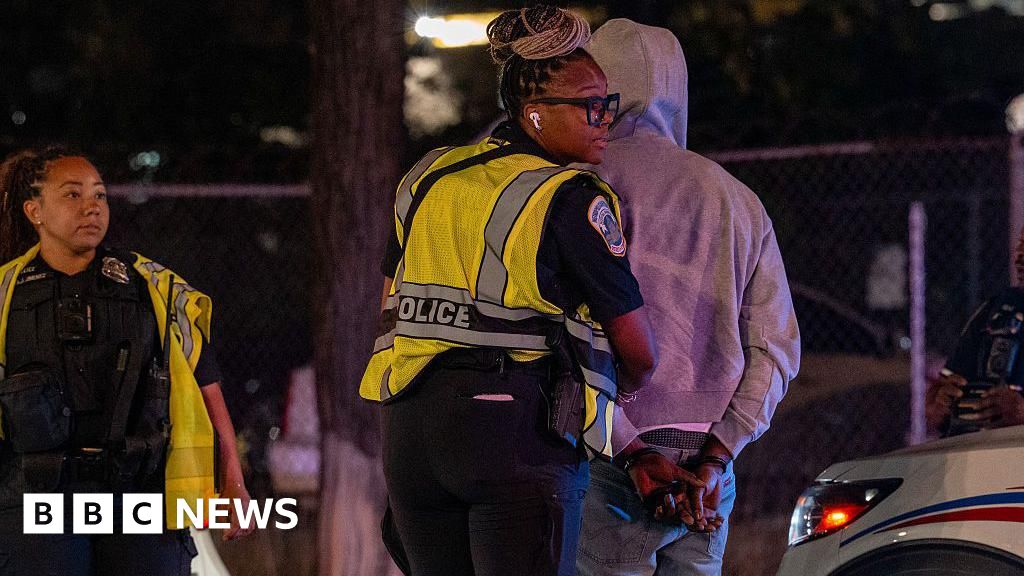
The controversial period of heightened federal intervention in Washington D.C.'s policing under the Trump administration is drawing to a close, marking a significant return to traditional local law enforcement authority in the nation's capital. This expiration signifies the end of a unique and often contentious era that saw federal agencies assert unprecedented control over the city's security apparatus.
The roots of this controversial "takeover" trace back to the social unrest of 2020, particularly in the wake of the George Floyd protests. As demonstrations escalated in Washington D.C., the Trump administration deployed a significant contingent of federal law enforcement personnel—including agents from the U.S. Park Police, Customs and Border Protection, and the Department of Homeland Security—to the city. These federal forces often operated independently of, or even in tension with, the Metropolitan Police Department (MPD), D.C.'s primary local law enforcement agency. The situation further intensified around events such as the clearing of Lafayette Square for a presidential photo opportunity and the lead-up to the January 6th Capitol attack.
The "takeover" was met with widespread condemnation from D.C. officials, civil liberties advocates, and many legal experts. Critics argued it represented a dangerous federal overreach, undermining D.C.'s limited home rule and politicizing law enforcement. Concerns mounted over the use of unidentified federal agents, aggressive tactics against protestors, and the perceived disregard for the authority of D.C.'s elected leadership. For many, it highlighted the inherent vulnerabilities of the district's status, where Congress ultimately holds supreme authority. Proponents, primarily within the Trump administration, defended the actions as necessary to restore order, protect federal property, and address what they characterized as a failure of local governance to control unrest.
This federal intervention was not a formal absorption of the MPD into a federal agency but rather an assertion of federal policing authority and the deployment of federal resources *within* the district, often with a different chain of command and rules of engagement than local police. This created a complex and often conflicting layered law enforcement presence that exacerbated tensions and confusion during critical moments.
The "expiration" of this controversial posture does not necessarily refer to a single expiring executive order. Instead, it represents the end of the directives, authorizations, and political will that enabled such an aggressive, federally-dominated policing strategy. With the change in presidential administrations, the emphasis has shifted back to cooperation with local authorities and respect for D.C.'s home rule. The current administration has largely reversed the previous approach, disengaging federal agencies from direct crowd control operations in the city unless specifically requested and coordinated with local officials.
The end of this period carries significant implications for Washington D.C. It reaffirms the MPD's primary jurisdiction over local law enforcement and reasserts the authority of D.C.'s elected government over its own security. While federal agencies will always maintain a presence in the capital to protect federal property and interests, the city is now poised to move forward with its own policing strategies, free from the shadow of such overt federal command and intervention. This experience serves as a stark reminder of the delicate balance between federal authority and local governance in the nation's capital and continues to fuel the ongoing debate about D.C. statehood, which would grant the district full control over its own affairs.
Comments
Post a Comment