Vision Pro M5: Our review indicates Apple stands at a crossroads, needing to make difficult and impactful strategic choices for its future.
## Vision Pro M5 Review: It’s Time for Apple to Make Some Tough Choices
The Apple Vision Pro arrived not with a whimper, but with a magnificent, albeit polarizing, bang. Hailed as the dawn of spatial computing, it showcased an unparalleled blend of hardware prowess and intricate software design. Yet, for all its revolutionary potential, it also arrived encumbered by significant real-world challenges: its prohibitive price, substantial weight, reliance on an external battery, and a still-nascent ecosystem of killer applications.
As we look towards the future, the inevitable "M5" chip upgrade looms on the horizon. If Apple's iterative chip development cycle is any indication, the M5 will represent a formidable leap in processing power, graphical capabilities, and power efficiency compared to the current R1 and M2 chips. On paper, it promises a smoother, more responsive user experience, the ability to render even more complex scenes, and potentially, a foundation for longer battery life. It will undoubtedly be a marvel of silicon engineering, pushing the boundaries of what's possible within a compact, wearable form factor. Yet, even with the M5's arrival, the fundamental questions surrounding the Vision Pro's viability and future trajectory will remain. This isn't just about a chip upgrade; it's about Apple confronting the inherent trade-offs of its ambitious vision and making some profoundly tough choices.
The M5, while powerful, will likely improve upon several critical aspects. Its enhanced efficiency might translate into slightly longer operational times, perhaps shrinking the external battery pack's size marginally or allowing for a more compact internal power source in a future generation. Its superior processing capabilities will enable even more sophisticated eye and hand tracking, bolster passthrough video fidelity, and support richer, more immersive applications and experiences. Developers will rejoice at the increased headroom, allowing them to push the boundaries of spatial computing in ways currently limited by the existing M2/R1 duo. Performance bottlenecks might ease, loading times could shorten, and multitasking within visionOS would feel even more seamless.
However, the M5 alone cannot solve the Vision Pro's most pressing challenges, which stem not just from computational limitations, but from fundamental physics, ergonomics, and market realities:
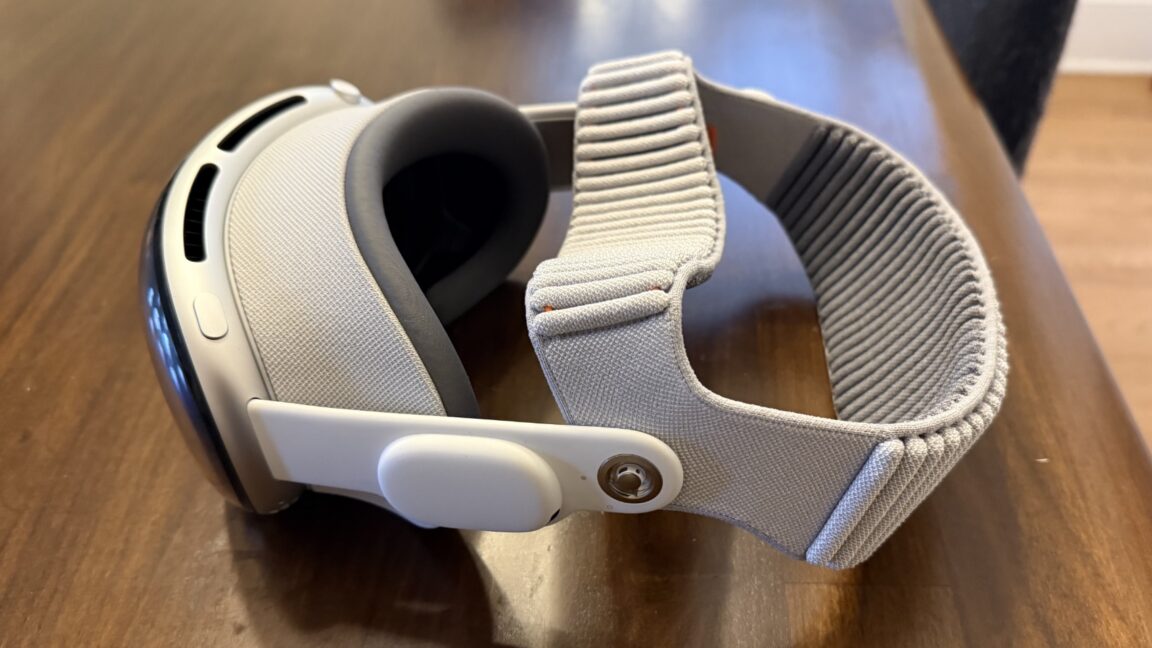
* **Weight and Comfort:** The current Vision Pro is heavy. While the M5 might be more efficient, the bulk of the device's weight comes from its high-resolution micro-OLED displays, intricate optics, and robust chassis. A more efficient chip doesn't magically lighten glass and aluminum. Achieving truly comfortable, all-day wear requires a radical reduction in the physical components, a challenge that goes far beyond silicon.
* **External Battery Pack:** Even with M5's efficiency gains, integrating enough power for several hours of intensive use into the headset itself without adding prohibitive weight and bulk remains a monumental hurdle. The external battery pack, while providing flexibility, fundamentally disrupts the user experience and mobility.
* **Cost Barrier:** The Vision Pro's $3,499 price tag places it squarely in the luxury or professional tools segment. While the M5 adds value, it's unlikely to drastically reduce the Bill of Materials (BOM) enough to bring the price down to a mass-market friendly level. The sophisticated displays, custom optics, and precise manufacturing processes will remain expensive.
* **Killer App & Ecosystem:** Power without purpose is merely potential. While M5 provides the canvas, the killer applications that make spatial computing indispensable for the average user are still emerging. Is it productivity, entertainment, communication, or something entirely new? The M5 won't conjure these applications into existence; robust software development and compelling use cases will.
* **Social Acceptance & Design:** The current design, while futuristic, still isolates users and draws attention in public settings. The M5 won't change the outward appearance or bridge the inherent social awkwardness of wearing a high-tech scuba mask. Future iterations require significant design breakthroughs to become more socially integrated.
This brings us to the tough choices Apple must make. The M5 represents a powerful iteration, but it’s becoming clear that a purely iterative approach might not be enough to transition Vision Pro from a technological marvel to a mainstream success.
1. **Niche "Pro" Device vs. Mass-Market Accessibility:** Does Apple lean into the "Pro" moniker, accepting Vision Pro as a high-end, specialized tool for developers, professionals, and affluent enthusiasts for the foreseeable future? Or do they aggressively pivot towards a mass-market version, even if it means significant compromises? If the latter, what are they willing to sacrifice – display resolution, processing power, premium materials, or some of the core "spatial computing" features – to hit a significantly lower price point and lighter form factor?
2. **Compromise on Vision vs. Compromise on Price/Form Factor:** Apple's vision for Vision Pro is uncompromising: high-resolution passthrough, incredible display fidelity, powerful spatial audio, and robust interaction. Can they achieve a truly lighter, cheaper, and more comfortable device *without* dialling back this ambitious technical specification? Or do they need to accept that a more practical, everyday device might require a step down in certain "Pro" capabilities, perhaps a Vision "Air" with lower resolution, simpler optics, or a less powerful chip?
3. **Iterative Refinement vs. Radical Redesign:** Is the current industrial design fundamentally flawed for mass adoption, requiring a complete rethinking of its physical architecture? Or can Apple iterate its way to success, shaving grams and dollars off with each generation, similar to how the iPhone evolved? The difference is the iPhone started as a pocketable device; Vision Pro is head-mounted, making physical constraints far more critical.
4. **Software-First vs. Hardware-First Focus:** While the hardware is undeniably groundbreaking, is the pace of software development and the emergence of truly indispensable applications lagging behind the hardware's capabilities? Should Apple shift significant resources towards nurturing a thriving developer ecosystem and identifying truly compelling use cases that transcend novelty, making the device indispensable rather than just impressive?
5. **The Integrated Battery Question:** The external battery is a significant user experience hurdle. Apple needs to decide whether to continue this design, prioritize external power for performance, or to make the integration of a reasonably sized internal battery a top priority, even if it means some compromise on runtime or weight. The future of a truly untethered spatial computing experience hinges on this decision.
The M5 will undoubtedly propel the Vision Pro forward, offering a glimpse into an even more refined spatial computing future. But it will not, and cannot, be the sole answer to the product's strategic dilemmas. Apple stands at a crossroads. The Vision Pro is a testament to what's possible, but its journey to widespread adoption will depend not just on raw processing power, but on the courage to make tough, perhaps even uncomfortable, choices that prioritize accessibility, comfort, and compelling utility over uncompromised, high-cost technical prowess. The M5 will buy them more time and capability, but the blueprint for spatial computing's future ultimately rests on these impending strategic decisions.
Comments
Post a Comment